Making it Through the Messy Middle
My family and I recently moved into a new house, and with new views and rooms has come the challenge of turning this empty house into a home. One aspect I was especially excited about was the way the empty house served as a blank canvas for me to create a home for my family.
Fast forward a few months, and I’m in the middle of my living room with my collection of decor strewn around me as I stare at my empty bookcases. My goal is to create beautiful vignettes in my bookcases. That one small word—vignette, a fancy way of saying 'beautifully put-together decorations on a surface'--belies the incredible amount of trial and error, frustration, and confusion I was dealing with as I worked to arrange my books, keepsakes, and pieces of art.

My first instinct was to walk away: Walk out of the room, away from the problem, and come back to it another day—or maybe never.
But, as I sat there with my anxiety growing, a realization dawned on me: What I was doing, the moment I was in in this design process wasn’t wrong: I wasn’t failing, it was just the messy middle of my process. The middle part of the journey where you know where you want to go (sort of?) and possibly how to get there (almost?), but the path isn’t quite clear yet; the fuzzy middle stage where your vision is just a little bit clouded, but (you can almost feel it) clarity is just around the corner.
I know the messy middle well. I enter into the messy middle on every writing journey I’ve ever had. Each time I sit down to complete a writing project, whether it’s content for our website, a blog post, a presentation, or an article, I have found myself in the messy middle. And, because I have so much experience with the messy middle, I can recognize it when it arrives, and I know how it feels—it feels like crafting a vignette on my bookcase. I often want to get up, walk away, and give up on my project. However, since I write for a living, I also know how to work through and around the messy middle so I get to a place of clarity in my writing.

· Take a step back: Just as with writing, I took a step back from my design problem. I did walk away—but only for a short break—and came back with fresh eyes. Taking a break from something you’re in the messy middle of can provide you perspective. Instead of focusing on everything that’s not quite right, after stepping away you can better see what you like and build from there.
· Ask for help: In the messy middle of creating my bookcase vignette, I pulled my husband into the room to provide me his perspective. Then, I took a picture and posted it to my Facebook community for their insight. Both groups gave me helpful feedback that allowed me to see what was and wasn’t working. This works well with writing too! Alternative perspectives can help all writers understand what is and isn’t working in your writing; writing is usually for an audience beyond yourself, after all, as Kacy explained in her post last month.
· Use input judiciously: When I asked for feedback on my bookcase vignette from my husband and Facebook community, I got a lot of opinions. Opinions are good, and much of the feedback was really helpful. However, if I had used all of the suggestions, my bookcase would have looked a hot mess. Instead, I had to use the input I received wisely, picking and choosing the input that helped me achieve my design goal. Similarly, when you receive input on your writing, especially a long writing project like a doctoral capstone study, be mindful to use feedback judiciously, in a way that helps you get closer to your writing goals. Otherwise, you may get lost in a maze of feedback that sends you in different directions.
Don’t get attached: Sometimes getting out of the messy middle means letting go of something you’ve been trying to make work from the very beginning—and thus, something you might be attached to. For my bookcase, I had been trying to fit so many keepsakes that I love—and had been brought with me from my old house—but that didn’t all fit. So, I had to emotionally let go of the idea that all of my beautiful things would work in the space, and this allowed me to see new possibilities. The same thing happens in writing: We can sometimes get so attached to a certain sentence or idea, that it’s hard to let go of it even though it’s not working.
· Create a “reserved” space: When working on my bookcase and editing the number of things I had in it, I would often take off items and put them in a box behind me. I told myself that anything in this box was on hold or reserve, and I could always add it back in down the line. Doing so made me more less afraid to remove something, because I wasn’t making a permanent decision. The same technique works with writing; rather than deleting sentences, paragraphs, or sections when you’re in the messy middle of a writing project, cut and paste that writing into a “reserved” Word document. You can then pull it back into your project at any point, if needed.


Beth Nastachowski has been with the Writing Center since 2010, and she currently manages the center’s webinars, modules, and videos. She spends her time running after her son, husband, two cats, and dog in St. Paul, MN.
.png)
Never miss a new post; Opt-out at any time
Bargain-Priced Candy Hearts and the Importance of Audience
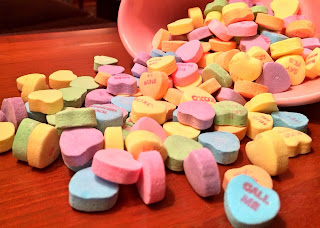
We've reached my favorite part of February: when all of the Valentine's Day candy goes on sale.

Digging through a
little box of colorful hearts, I can't help reading each little message as it comes up: "love", "laugh", "be mine",
"smile", "you & me", "cute", "rock
star", "hug me", and others are fairly obvious. But then there
are hearts with messages like: "TTYL", "DM me",
"lol" and "LYMY". I actually do understand the first three
(talk to you later, direct-message me, and laugh out loud) but the fourth is a
complete mystery to me. (EDIT: I've looked it up and apparently it stands for
"love you, miss you".)

This variety of mini-comments makes me think of what we mean when we advise writers to consider their audience. Maybe some of you already knew what LYMY meant. Maybe others would be confused by hearts reading "XOXO" or "BFF". Fortunately, the candy will taste the same whether you know that x's and o's are sometimes used to represent kisses and hugs in correspondence, or that BFF stands for "best friends forever," but scholarly writing does not benefit from the same sugary advantage.
Anything we write
has an intended audience--even if that intended audience is ourselves or an
intended audience of no one. When you write for coursework there is the obvious
audience of the faculty who will grade the work, but there is also often an
implied audience. Perhaps you've been instructed to write a lesson plan to
share with another educator; a business memo to be shared with a large
corporation; an interpretation of and diagnosis for a certain case study.
You'll of course want to make sure you respond to each component of the
assignment prompt, but you should also consider who you're conceptually writing
for.
-
What kind of information can you assume your audience will already
have about the topic?
o
Would you need to explain what TTYL stands for?
-
What context does your audience need?
o
The fact that they are Valentine’s candy would suggest that
messages like “smile” or “call me” have a different sentiment than they would coming
from a photographer or a business card.
-
What are you ultimately hoping to achieve with regards to your
audience?
o
When you send a Valentine to a friend, the message will likely be
different than the one you send to your romantic interest.

To help you remember how to acknowledge the importance of your intended audience, here’s a somewhat forced acronym relating back to candy hearts:
How: how are you expected to present your information? The mode of communication will provide some clues into who your intended audience might be.Expectation: what
can you expect your intended reader to already know?
Additional: what
extra background information will your reader need you to provide in order to
fully understand what you’re trying to say?
Response: is there
something you hope your reader will do with the information after reading? Are
there potential questions or arguments you could circumvent by addressing them
in your writing?
Task: what is the ultimate
task you’ve been given with regards to the assignment? Would your reader be
able to easily determine it based on what you’ve written?
To my intended
audience: I hope you had a fun Valentine’s Day—or are at least similarly
benefiting from reduced-price treats. And I hope this acronym and post in general
are memorable enough to help you in your next writing assignment!
 Kacy Walz is a writing instructor from St. Louis, MO. She is currently working on a PhD in Literature from the University of Missouri. Along with her work on the blog, Kacy also cohosts the Walden Writing Center podcast. She enjoys piña coladas and getting caught in the rain.
2022: Just Keep Swimming
In his 2017 bestselling book Finish, author Jon Acuff writes, "I thought the biggest problem for people was the phantom of fear that prevented them from beginning...Fear was the ghost holding them back and starting was the only way to beat it. I was half right. The start does matter. The beginning is significant. The first few steps are critical. But they aren't the most important. Do you know what matters more? Do you know what makes the start look silly and easy and almost insignificant? The finish."
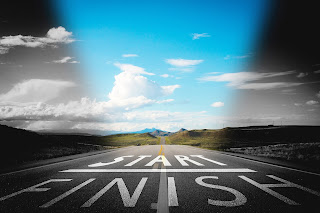
Last March I introduced the blog's 2021 theme of Motivation. This year--a year actually beginning in January!--I'd like to continue that concept into a new theme: the theme of Momentum.
As Acuff points out, starting is important. And motivation can help us get to the starting line. But momentum is what gets us through the slog of the "messy middle." According to Acuff, the most important point of any major goal or project is what happens "the day after perfect."
The day after perfect is what Acuff calls the period of time that follows the first instance someone doesn't live up to their own idea of what the completion of their goal should look like. It's the day after the first time you hit snooze instead of waking up early for a run, the night after the night you fell asleep without writing in your journal, the meal after you passed on the salad bar and went straight for dessert. It's the moment you might be tempted to say, "Well, I've already messed up, might as well just give up entirely!"

So this year we're going to try to build on our motivation and find the momentum to keep moving forward even after our plans go slightly askew. The topic will be applied to writing-related issues, but hopefully these ideas will be useful in all areas of life. Here's to 2022!
Reference
Acuff, J. (2017). Finish: Give yourself the gift of done. Portfolio/Penguin.
The Benefits of Regret
I can't believe it's already the end of December. It seems this past year was both unending and insanely short. (Or is that just me?) I introduced the blog's theme of motivation in March and--while it hasn't been a full year--it seems fitting to look back at that theme and start planning for 2022. (It will probably be March again before I'm able to write 2022 without either first writing 2021 or feeling the need to double-check that I'm not making up a year).

My WriteCast cohost, Claire Helakoski, will be posting an episode focused on SMARTER goals at the beginning of next month and the discussion we had got me thinking about how we can use reflection--as well as careful planning for the future--to ensure we move forward in our most important goals. In particular, I'm wondering if there's a way to reframe supposed 'failures' and regrets so they can propel us in a positive way rather than holding us back.
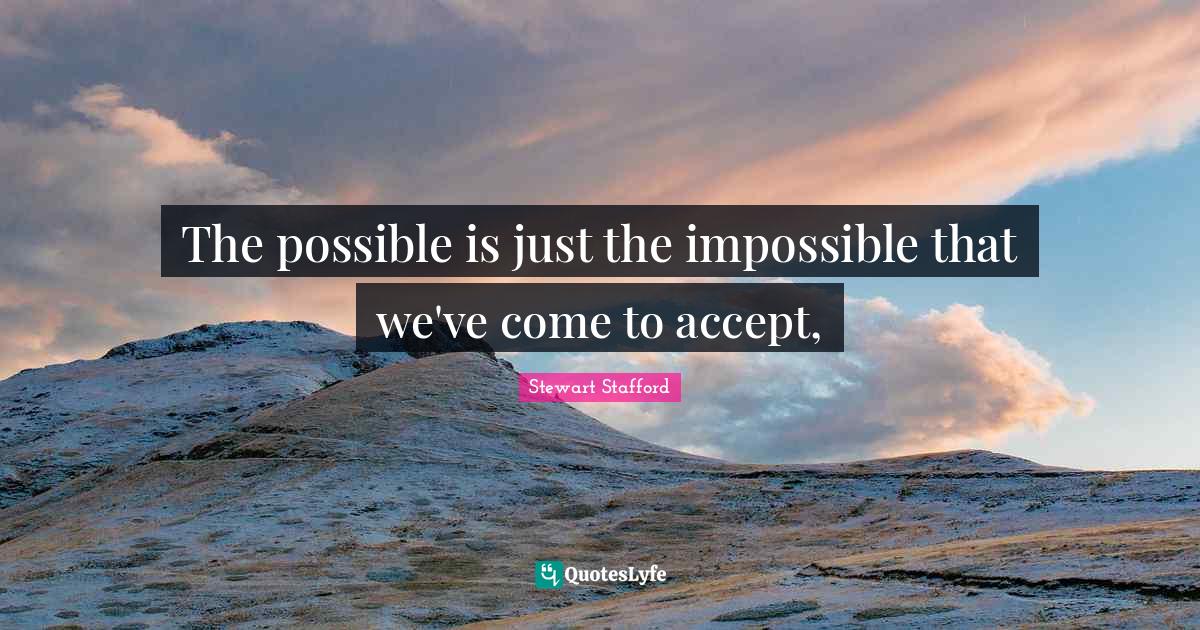
Much research has been done on the ways thoughts impact reality. As productivity coach Michael Hyatt (2021) put it, "we tend to experience what we expect...our success ultimately depends on our ability to tell the difference between reality and the story we are telling ourselves...when we believe we can't, we don't. The difference is all in our heads" (p. 18). Similarly, author Stewart Stafford argued, "the possible is just the impossible that we've come to accept" (QuotesLyfe.com). Basically, how we frame things in our own minds is important.
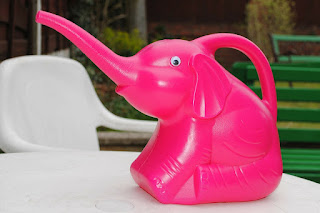
This is why I think it would be a good idea to (re)frame how we might usually think about our past mistakes, regrets, and anything we might consider a failure. Some of my favorite motivational quotes run along the lines of, 'failures are actually opportunities for learning' but at times this can seem cliché or flippant. Personally, I find these quotes inspiring in general, but less helpful in times I find myself overthinking things I've done or avoided doing. If you're like me, hearing "don't think about pink elephants" instantly conjures images of those animated "heffalumps" from "Winnie the Pooh and the Very Blustery Day" (or some other version of elephants in shades of faded red). And quotes like "we learn from failure, not from success", at a time when I'm overthinking, read as platitudes rather than sound advice (Stoker, 2000, p. 103).
References
Hyatt, M. (2021). Your best year ever. Michael Hyatt & Company, Inc.
Landman, J. (1993). Regret: The persistence of the possible. Oxford University Press.
QuoteLyfes.com. (n.d.) Steward Stafford quotes. https://www.quoteslyfe.com/quote/The-possible-is-just-the-impossible-that-258026
Roese, N. J., & Summerville, A. (2005). What we regret most...and why. Personality and Social Psychology Bulletin, 31(9), 1273-1285. https://doi.org/10.1177/0146167205274693
Stoker, B. Dracula. Dover Publications, Inc.
Kacy Walz is a writing instructor from St. Louis, MO. She is currently working on a PhD in Literature from the University of Missouri. Along with her work on the blog, Kacy also cohosts the Walden Writing Center podcast. She enjoys piña coladas and getting caught in the rain.
How to Find and Keep Your Confidence as an Academic Writer
How does confidence impact writing and the motivation to write? What adds to our confidence when it comes to writing, and what diminishes it? How can a writer maintain, develop, or rebuild confidence in their writing skills?

To begin with a definition (because it's probably best to know what the thing is before we discus how to increase it!), Merriam-Webster (n.d.) described confidence as "a feeling of or consciousness of one's power" and "faith or belief that one will act in a right, proper, or effective way." In other words, confidence is trusting that we are capable of accomplishing a goal we've chosen to pursue or a task we've been assigned. Confidence is feeling good about our ability to be who we want to be and do what we want to do.

Reciving a disappointing grade, or criticical feedback that doesn't seem helpful understandably brings us down, especially if our confidence when it comes to writing is already shaky. Also, if we feel we're alone in the writing process, or like we don't know enough about academic writing as a genre to be able to do it well, we definitely won't be enjoying the good feelings confidence brings.
But there is hope. (We definitely wouldn't publish this post if we didn't think so!) When it comes to academic writing and APA style, the Walden WritingCenter’s website offers a number of resources to help students learn more about the expectations involved. We also strongly encourage you to reach out to your professors to clarify what is required of you for any assignments that seem confusing or unclear, or to discuss any feedback they provide. Finally, forming meaningful relationships with your fellow students--for instance, creating spaces where you can vent to, commiserate with, and encourage each other--can help keep those feelings of loneliness at bay.

Reference
Merriam-Webster.
(n.d.). Confidence. In Merriam-Webster.com dictionary. https://www.merriam-webster.com/dictionary/confidence

Grete Howland is a writing instructor who's been with the Walden Writing Center since 2019. Before joining the Writing Center, Grete taught English and creative writing to middle and high school students. When she's not working with words, Grete loves paddle boarding, running, wine tasting, and hanging out at home with her husband and dog.
Never miss a new post; Opt-out at any time


