Showing posts with label Staff Spotlight. Show all posts
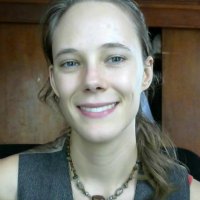
Interview with Patrese Nesbitt, Walden DrPH student and 2019/2020 Writing Center Intern
In 2019, Patrese began a 9-month internship with the
Writing Center, during which she learned about writing center pedagogy, giving
writing feedback to students through our paper review appointments, and attending the International Writing
Centers Association conference in Columbus, OH. We are grateful Patrese was
interested in the internship, as she is also working full time as a faculty
member and pursuing her Doctor of Public Health from Walden. She is also now a
published author on the Writing Center blog with her blog posts “The Art of Storytelling: Mastering Paraphrasing” and “How to Manage Procrastination and Brain Fog,”
where Patrese brings her unique perspective as student, faculty member, and
writing center intern to give students writing advice.

Join us in learning a bit about Patrese, how she manages so many responsibilities in her life, and her tips for other Walden student writers.
Writing Center: What are you studying at Walden?
Patrese: Doctor of Public Health (DrPH)
Writing Center: You are also a faculty member at your institution. What do you teach?
Patrese: I am an Assistant Professor and I teach Health and Physical Education at Kentucky State University in Frankfort, Kentucky.
Writing Center: How do you spend your free time?
Patrese: I spend my free time reading, working out, traveling with family and friends, watching make-up and hair tutorials, or studying about mindfulness and health.
Writing Center: You have a lot going on: How do you keep track of everything or keep yourself organized? How do you make time for it all?
Patrese: I have and stick to a “to-do” list! I have a “to-do” list at home which is a dry erase board, updated daily. My “to-do” list is just a notebook at work. As you can imagine, I’ve gone through a lot of notebooks!

Writing Center: What is your approach or goal to one-on-one paper reviews and when giving students writing feedback?
Patrese: I want to make sure the student knows that I am aware of their own personal goals of their paper review appointment. I do so by stating their goals at the start of their paper review appointment. I may also state their personal goals throughout the paper; sometimes I may ask “what do you think?” to the student to show that I am engaged but I am open to their interpretation and suggestions as well. It is a learning experience for the both of us!
Writing Center: Why or in what ways do you think students can benefit from a one-on-one paper review appointment?
Patrese: One-on-one paper reviews are an exceptional way to have an individualized review based on your goals, tasks, and abilities. I’ve benefited from a one-on-one appointment at the very beginning of the DrPH program, and it was superior! While I had the opportunity to attend writing centers at my prior institutions, one-on-one paper reviews, in an asynchronous format, feels as if the writing instructor has time to review my personal information without making me feel embarrassed!Writing Center: What have you benefited the most from or learned the most about during your Internship with the Writing Center?
Patrese: I increased my knowledge base on the number of tools the Writing Center has towards improving writing. The increased knowledge provided from the internship will help with the success of my dissertation.
Writing Center: What’s one thing you’ll take away from the Internship and use in your writing at Walden or your teaching at your institution?
Patrese: Appointments! More students should take advantage of making appointments with the Writing Center to achieve their goals as well as staying on task in their course. I will actually make more appointments! So, Beth, Amy, and Max will certainly see more of me!
Writing Center: What is the most helpful advice you’ve received about writing?
Patrese: I find myself typing how I talk, which is ok, but I firmly believe in the process of proofreading/self-editing. You learn so much about your writing style and it helps to ensure you are on task. One more note: follow the MEAL Plan for your writing as if your life depended on it!
Writing Center: Could you talk about a particular writing challenge you faced and how you overcame that challenge?
Patrese: I procrastinate! I prepared a blog about procrastination and it is something I still struggle with as a doctoral student. As one who has struggled with anxiety, I’ve used procrastination to cope with anxiety due to fearing (or overthinking) that what I am writing about is wrong, or I am off topic, and the worst can happen as a result of poor writing. Having a “to-do” is list extremely helpful and has helped me to overcome that challenge. I can always tell when I operate “away” from my “to-do” list. I am not as focused, and distractions are everywhere.

Writing Center: What’s one writing accessory you can’t live without—or something you couldn’t write without?
Patrese: A college ruled, $0.69 notebook! I carry at least one everywhere!! Especially now as I am getting closer to writing my dissertation!
Writing Center: Describe your approach to writing in three words:
Patrese: Prepare, plan, pray.
Prepare: Get all the tools that are needed; read the material that helps to reference what you are writing, use a notepad to mind-map or outline what your paper will state, and find a comfy sitting area to write your paper.
Plan: Back to the “to-do” list! Break apart difficult tasks or break apart tasks that may be big (or time consuming) and may lead to overthinking and anxiety.
Pray: or be mindful in what you are getting ready to do. Mindfulness to me means being “in the moment”. Praying helps me to get in the moment and put all my focus on the task from start, through the process, and to completion.

.png "Send me new posts by e-mail")
Never miss a new post; Opt-out at any time
The Art of Storytelling: Mastering Paraphrasing
As an avid reader, I love stories about revolutionaries, abolitionists, orators, or great public speakers. I am particularly drawn to stories pulled from African American history: Harriet Tubman, Malcolm X, Madam C.J. Walker, and my favorite, Shirley Chisholm, the first African American female to run for President of the United States.
You might have thought I read an entire book about the life of Ms. Chisholm, based on my mentioning she was the first African American female to run for the presidency. I actually did not read a book about Ms. Chisholm. Instead, I pulled various online resources about the life of the former Congresswoman from the Smithsonian and the U.S. House of Representatives websites, as well as scholarly articles about her life and history as an educator.
So, is this how paraphrasing works? You pull pieces of information from different resources and articles and put them in a paper? Well, sort of. As you continue reading, you will find this post is intended to help you get comfortable with paraphrasing by providing some encouraging insight on how to tell a story. Crafting your story from your interpretation of course assignment readings and research articles may appear to be a daunting task. Still, your professor will be impressed by your efforts in understanding the content from the course, which ultimately aids in your application of the gained knowledge to your profession and your passion.
My story is similar to Ms. Chisholm’s—I am somewhat of a revolutionary, or as my mom would call me, headstrong. I have New York and Caribbean roots (Dad was Jamaican American), and I love my current full-time career as an assistant professor. Ms. Chisholm’s facts are easy to paraphrase for me because I so easily relate her life to my own story and experiences. We both possess one key element, which is that we both hold a commitment to social change.
So, when you paraphrase, think of how you can relate the information to your own story. Here are some tips that may be helpful:
1. Determine your interest: When reviewing your course assignments, find information that is of importance to you. The assignment is much easier to interpret when you have interest, even if it is just a small part of a chapter from a course assignment.
2. Consider social change: I get it, there may not be any articles directly applicable to you or your background. Therefore, find content that encourages and inspires you to be a change agent. Ask yourself, what could you or what would you do differently from this article that would contribute to social change in your career field?
3. Use those bright highlighters: Highlight and note parts of articles and chapters that stand out to you the most. Often times, those points will help you to understand the material from the article better. Highlighting also shows your professor that you know the text, which further helps you to understand the assignment with proper execution.
4. Have no fear, my friend: Do not be fearful of words that you don’t know the definition of. Highlight those words and use the thesaurus tool in Microsoft or look up the meaning of the highlighted word. No harm in looking up the meaning of individual words to get your point across in a scholarly manner without copying something directly from the article.
5. And Again, re-read! There may be areas you may have missed or additional areas you want to highlight.
Plagiarism, Citations, and Quotations: In your reading, you may find out that an author’s description of a topic is clear, concise, and well written; therefore, it may be easy and effortless to just directly copy the content into your course assignment. Before you do, ask yourself, “did I give the author credit for their work?”, “did I quote or paraphrase?”, and “is this something I would say in getting my point across about the content?”
1. Professional Advice: Review your work. Ask yourself, “Is this what I want to say about this article?” “How did this article resonate with me?” “Did I cite facts?” “Did I properly give my interpretation of this article?” and the most critical question, “Did I answer my professor’s question?”
2. Be confident: Most importantly, be confident! You are the author, so your text, your interpretation, or your story is vital for the learning experiences, not only for yourself but for everyone else who reads your writing.
As you are crafting your own interpretation of something you read or are paraphrasing, picture it as the most exciting topic one has ever wanted to read. Spare no details and confidently present to the reader, as an author, your interpretation of what you read. Think about who you might be helping as a result of your storytelling.

Patrese Nesbitt is a writing intern at the Walden University Writing Center. She enjoys reading articles that are inspirational, in addition to doing research on how certain physical movement patterns help with mental health. As a doctoral candidate in Walden University’s Public Health Program, she is eager to find ways to intrinsically and extrinsically motivate people to live an improved and upgraded quality of life.
Never miss a new post; Opt-out at any time
WriteCast Episode 41: Meet Your Reviewer: Kacy Walz's Review Approach, Writing Advice, and Recommended Resource
 Nearly a year ago, the Walden University Writing Center
welcomed two new writing instructors to our team. If you are a student with us
at Walden, you may meet, or have already met, Kacy Walz through paper reviews,
the blog, webinars, our newsletter, or the doctoral writing assessment.
Nearly a year ago, the Walden University Writing Center
welcomed two new writing instructors to our team. If you are a student with us
at Walden, you may meet, or have already met, Kacy Walz through paper reviews,
the blog, webinars, our newsletter, or the doctoral writing assessment.Take some time to get to know Kacy better by listening to her interview on our podcast, WriteCast, where she reflects on what she learns as an instructor and shares writing tips that she follows herself.

The Writing Center employs professional writing instructors and editors to help with all parts of the writing process. We offer paper reviews, a blog, webinars, modules, live chat, and WriteCast, the Writing Center's podcast.
Never miss a new post; Opt-out at any time
How I Learned That Editors Need Editors Too
Back when I was a book editor for a self-help publisher, I came up with an idea for a book. I presented it to the review committee and to my delight, they approved it. Because we could not find qualified writers, I was told to go ahead and write it myself. Me? Write a book? Me? I was both thrilled and daunted by turns. I had never written anything so long nor over so long a period.

But at least I knew what I wanted to say and how I wanted to say it. The book would consist of 365 essays of 200 words each. According to the contract, I had to write two a day, 7 days a week. Monday through Friday, I would go to the office, work 8 hours, and then come home to eat, walk the dogs, and write two short essays. When I turned out the lights, I was exhausted. Some days I liked what I’d written, some days I just couldn’t get the words right. I was grateful for the contract: In bold letters it said I was the one for the project and, by implication, that I had no choice but to find the energy and the fortitude to complete it.
After 7 or 8 months of steady 2-hour stints, I finished the first draft. What satisfaction, what relief! What a dreaded next step: a formal edit. Instead of being the editor and delivering an edit, I was now the author and receiving one. Though my editor was a friend with whom I’d work for years, I didn’t trust her. I didn’t trust that she’d understand what I was trying to say or how I was trying to say it. In other words, I had little confidence in my work.
When I got her review, I was afraid to look at it. It felt like opening an overdraft notice from my bank. To my surprise and relief, she did understand my ideas and my approach. While she offered comments and suggestions, all were informed, respectful, and useful. And yet, as I revised page after page, I felt irritated and defensive. I was tired, to be sure, but I took the review personally and my ego was suffering. A few months later, the printed book was in my hand and my ego was soaring. I forgot all about the stress and had a little publication party with family, friends, and colleagues who’d worked on the book.
For many of us, writing is difficult. It means creating something out of nothing and we don’t really know what we know until we’ve tried to put it down on paper. When we're sure what we’ve written is what we wanted to say, we revise to make sure it flows. But being so close to our work, it’s often hard to easy to see just what needs help. But if the act of writing can lead us to say what we want to say, then an editor can help ensure that it gets said and said well. (Editors need editors too.) Despite the extraordinary effort on the writer’s part, writing for publication turns out to be a team effort: All stakeholders want the work to be as good as it can be.
.png)
Tim McIndoo is a Senior Dissertation Editor in the Walden Writing Center. He came to Walden University in 2007 with over 30 years of editorial experience, including work as translator and photographer. He lives in Minneapolis with four cats.
Never miss a new post; Opt-out at any time

But at least I knew what I wanted to say and how I wanted to say it. The book would consist of 365 essays of 200 words each. According to the contract, I had to write two a day, 7 days a week. Monday through Friday, I would go to the office, work 8 hours, and then come home to eat, walk the dogs, and write two short essays. When I turned out the lights, I was exhausted. Some days I liked what I’d written, some days I just couldn’t get the words right. I was grateful for the contract: In bold letters it said I was the one for the project and, by implication, that I had no choice but to find the energy and the fortitude to complete it.
After 7 or 8 months of steady 2-hour stints, I finished the first draft. What satisfaction, what relief! What a dreaded next step: a formal edit. Instead of being the editor and delivering an edit, I was now the author and receiving one. Though my editor was a friend with whom I’d work for years, I didn’t trust her. I didn’t trust that she’d understand what I was trying to say or how I was trying to say it. In other words, I had little confidence in my work.
When I got her review, I was afraid to look at it. It felt like opening an overdraft notice from my bank. To my surprise and relief, she did understand my ideas and my approach. While she offered comments and suggestions, all were informed, respectful, and useful. And yet, as I revised page after page, I felt irritated and defensive. I was tired, to be sure, but I took the review personally and my ego was suffering. A few months later, the printed book was in my hand and my ego was soaring. I forgot all about the stress and had a little publication party with family, friends, and colleagues who’d worked on the book.
For many of us, writing is difficult. It means creating something out of nothing and we don’t really know what we know until we’ve tried to put it down on paper. When we're sure what we’ve written is what we wanted to say, we revise to make sure it flows. But being so close to our work, it’s often hard to easy to see just what needs help. But if the act of writing can lead us to say what we want to say, then an editor can help ensure that it gets said and said well. (Editors need editors too.) Despite the extraordinary effort on the writer’s part, writing for publication turns out to be a team effort: All stakeholders want the work to be as good as it can be.
Tim McIndoo is a Senior Dissertation Editor in the Walden Writing Center. He came to Walden University in 2007 with over 30 years of editorial experience, including work as translator and photographer. He lives in Minneapolis with four cats.
Never miss a new post; Opt-out at any time
How I Learned to Write for My Audience, Not Myself
My
first opportunity to write an academic paper came early in my freshman year of
college, in a class called “International & Avant-Garde Films of the
1920s.” As a longtime film buff, I already knew a lot about the topic and was
eager to demonstrate. Looking back, I was a bit of a hotshot and definitely
obnoxiously confident that I knew what I was talking about. So I was taken
aback when my professor met me later and told me that my writing, while good,
was a bit “glib.”
This
instance was one of many wake-up calls throughout my life when my writing was
changed due to some forceful, sometimes insulting but truthful wake-up calls. This
was truly a time in my life when I learned to stop writing for myself, and
start writing for my audience.

Being
a hotshot, of course I resisted this criticism at first. Clearly, my professor
was just unworthy of understanding my genius, right? Well, no—it turns out she
was completely right. My writing was clever, full of smart allusions and
phrases that certainly gave the impression I was well-read on the topic, but
often ended up being irrelevant to my main argument or claim. My word choice
was, in Shakespeare’s famous words, lots of sound and fury signifying nothing.
More recently, writing a book about rap music for children has helped me hone my style even further. It was at first very difficult for me to write for a sixth to eighth grade reading level, which requires a certain simplicity of word choice and a word cap on sentence length. At first it became very difficult to explain certain terms and ideas in simple language, but my struggle made me better again at boiling down my writing to its barest, most necessary essentials.
A
strange thing has happened to me over time: Even with all the restrictions and
rules of academic writing, my creativity did not feel stifled. In fact, it felt
liberated. Over time, I slowly learned the rules of literary analysis and close
textual reading. Instead of using jargon-heavy “academese,” I used direct and
simple language that clearly followed from sentence to sentence. I felt my
thinking and writing was becoming clearer. By the time I was in grad school, I
was putting all these lessons into practice and consequently, producing a lot
more interesting work.
The
result of this continual renewal process is that my writing is much, much
better than it was even a few years ago, and it comes down to word choice. This
is what makes certain writers like Ernest Hemingway worth teaching, in my
opinion. Many a high school composition teacher has used Hemingway as the model
of a good writer, but the more important element is that he is a profoundly simple writer—he almost completely
eschewed adverbs or extraneous adjectives. He may not be a model for every type
of writer, but he was a great model for my type of writer—someone who can write
a lot and was easily self-impressed by lengthy sentences and big words.
A
common Hemingway sentence is something like, “He sat and drank his beer.”
Another writer might compose something like “He reposed at an acute angle in
his favorite chair from childhood and drank a beer from a cold glass with a
straw.” At one time, I would have written something like the latter sentence.
Now, I see the former sentence as better.
Good
word choice to me is always about simpler word choice, and it is a lesson I
believe I will continue to keep learning.

Nathan Sacks is a writing instructor in the the Walden University Writing Center. He also enjoys writing books, playing guitar, and playing with cats..
Never miss a new post; Opt-out at any time
How I Learned to Use APA Style
It’s a new year, and new years are a great time to reflect
on what we’ve learned and what goals we’d like to set for ourselves moving
forward. One of my personal accomplishments this year is learning APA style and
formatting, which I did not know when I first joined the Walden University
Writing Center. Today I want to share how I learned APA and, through practice
and regularly double checking my work, became an APA master. It wasn’t easy,
but I did it and you can, too!

Claire Helakoski is a Writing Instructor at the Walden Writing Center and holds an MFA in Creative Writing. She has taught writing and Composition as well as acted as a writer and editor in a variety of mediums. She lives in Grand Rapids, Michigan, and enjoys reading, writing creatively, and board games of all kinds.
Never miss a new post; Opt-out at any time

My Journey to APA Style
The academic writing background I come from is primarily
Modern Language Association’s style (MLA), and I know many Walden students are
familiar with one of the many other citation styles as well. There are many
similarities between these citation styles in general, but the precise formatting
is different. Additionally, APA style is more than just citations—it also
involves an entire philosophy of clear, direct, specific communication. But I
was determined (and required) to learn and understand APA for this position to
best be able to help the students I work with. So I did.
One of the major things I did to help become familiar with
APA was to read the manual. Yep, I actually read the entire manual, and I
seriously recommend that you do, too. It may sound tedious, but if you are
unfamiliar with academic writing and specifically writing in the sciences, it’s
essential reading to understand the underlying philosophy of APA writing—which
is to let the facts speak for themselves, and be as clear and precise as
possible for your readers.
Reading the manual helped me to learn the guidelines, but it
also helped me learn the reasoning behind those guidelines. APA can seem like a
lot of arbitrary rules (like citing after each sentence, for example) but there
are actually very concrete reasons behind these rules. The APA manual makes the
reasoning clear. For example, citing after each sentence is required because writing
in the social sciences tends to be research-heavy, so it is important for
readers and researchers to know where the information came from and where they
can learn more to fuel their own research projects.
You Can Learn from What I Learned
Mostly importantly, when you’re learning a new writing skill
like APA style, don’t get discouraged. When I first started learning APA I was
completely overwhelmed by how often you need to cite (in MLA it’s just at the
end of the paragraph), but you will really get used to it. Use the
Writing Center’s resources (like I do!) to help you stay motivated and in the
clear. Here's the Writing Center’s overview page on APA. There are plenty of links and videos for you to check out on this page as well.
Using different types of resources that stimulate different
parts of your brain can also be a very helpful way to help you take in this new
knowledge. I’m the kind of person who can understand concepts when they’re
explained to me, but they don’t really sink in until I do something with those
concepts for myself. The interactive components and examples of the Writing
Center’s webinars and modules were key to helping me not only understand how
APA worked, but how I could use it correctly. You can find our modules and webinars on our writing resources page here. Use them to put into practice the knowledge you gained by reading
the manual.
As you start to incorporate all this APA knowledge you’ve
gained into your writing, don’t forget to keep your manual nearby. It’s important
to double check things! I know it will feel tedious at first to double check
your reference entries, search for use of passive voice, or remember to avoid
using unclear pronouns like “we” —but it gets easier. Repetition is key to
learning and mistakes are okay. Make a checklist of common errors or find some
tools and pre-made worksheets that can help you remember all those tricky rules. Make sure you check through it before you turn in assignments and you’ll
start internalizing the errors and see them less and less.
Don’t forget: Your friendly Writing Center Instructors and
Editors are here to help you along the way, but it will be most beneficial to
you as a scholar to work on your APA over time until it becomes
second nature! Just like research in your subject area, you really have to
steep yourself in a topic before internalizing the ideas and concepts. Maybe one
of your reflections for this year could be on what APA rules you’ve mastered,
and some of your goals could be to continue working on ones you still have
difficulty with. It worked for me!
Have APA questions? Email us at writingsupport@waldenu.edu.
What do you want to learn next year? What are some personal triumphs from this
year or previous ones? Share them below!
Claire Helakoski is a Writing Instructor at the Walden Writing Center and holds an MFA in Creative Writing. She has taught writing and Composition as well as acted as a writer and editor in a variety of mediums. She lives in Grand Rapids, Michigan, and enjoys reading, writing creatively, and board games of all kinds.
Never miss a new post; Opt-out at any time
"How I Learned To......." Blog Series Begins Monday
Here at the Walden University Writing Center, we're embracing the spirit of this time of renewal as we turn over the final page in our calendars and welcome a new and exciting year into our lives. In the coming weeks on this blog, we will share some of our stories about times when we learned things about writing and ourselves.

We hope these stories will inspire you to keep working hard at developing your academic writing skills. As we work with students here in the Writing Center, we see the struggles and challenges that accompany the process of learning to write at a scholarly level. Even when it feels most hopeless, we encourage our students to keep working, keep practicing, and keep their eyes on the broader goal.
So, Dear Reader, if you are ever feeling like your writing will never improve, we hope these narratives from our Writing Center Instructors and Editors will show you that there is hope. Even the most highly-trained writing experts had to work hard to achieve the skills and knowledge that they currently possess.
Never miss a new post; Opt-out at any time

We hope these stories will inspire you to keep working hard at developing your academic writing skills. As we work with students here in the Writing Center, we see the struggles and challenges that accompany the process of learning to write at a scholarly level. Even when it feels most hopeless, we encourage our students to keep working, keep practicing, and keep their eyes on the broader goal.
So, Dear Reader, if you are ever feeling like your writing will never improve, we hope these narratives from our Writing Center Instructors and Editors will show you that there is hope. Even the most highly-trained writing experts had to work hard to achieve the skills and knowledge that they currently possess.
Take heart! And please enjoy our stories. If you would like to share your "How I Learned...." story about your writing journey, please send an email to WritingSupport@waldenu.edu. We'll reach out to you and you might be featured on this blog!
Never miss a new post; Opt-out at any time
Subscribe to:
Posts
(
Atom
)


