Showing posts with label Faculty Spotlight. Show all posts
Where Do You Find Your Writing Motivation?
Faculty Voices: Walden Talks Writing Spotlight


Beth Nastachowski Associate Director, Office of Writing Instruction.Beth Nastachowski has been with the Writing Center for 10 years and lives in Saint Paul, Minnesota.
.png)
Never miss a new post; Opt-out at any time
Finding motivation to write has always been somewhat allusive for me. While I’m generally a pretty productive person, when it comes to writing, I often find myself procrastinating and waiting until conditions are just right to sit down and put words on the page.

Getting those conditions “just right” often means that I need to start writing well ahead of my deadline. For me, if I start writing without a deadline breathing down my neck, I can often trick my mind into thinking I’m working ahead of schedule, something my type-A personality really appreciates. This practice feeds my motivation, and I often find that writing comes easier to me when I’m writing working ahead.
The other component of writing motivation for me is finding the right environment to write in. As a staff member in the Writing Center, I work from home and on my computer five days a week, so I find that I can easily be distracted if I try to write in my home office. Instead, I try to go somewhere else to do my writing: Right now, I’m writing from a quiet coffee shop down the street. There’s something about the ambient noises in a coffee shop that let me focus on my writing. No one particularly minds if I stare out the window as I think, and I feel a sense of kinship with the other people here working on their own writing.

Recently, the Writing Center asked faculty contributors to our Faculty Voices: Walden Talks Writing project about where they find their writing motivation. Everyone has their own quirks about how or when they write best, and learning from others can help you learn what works for you.
Watch the video to hear what our faculty contributors had to say, then think about your own writing motivation:
Where do you find your writing motivation, and how can you cultivate that writing motivation to help you be a productive writer?

Beth Nastachowski Associate Director, Office of Writing Instruction.Beth Nastachowski has been with the Writing Center for 10 years and lives in Saint Paul, Minnesota.
Never miss a new post; Opt-out at any time
Faculty Voices: Walden Talks Writing
With almost 700 (yes, you read that right!) blog
posts in our 10-year history, Writing Center bloggers have shared their
perspective on a variety of writing topics and many ways of thinking about
writing. Writing is such a rich topic for a blog because there are so many ways
to write about writing.

However, we realized that as much as you all enjoy hearing
from the Writing Center about writing, the faculty perspective on writing is
also extremely important and useful for students. Faculty are a wealth of
knowledge, bringing their experiences as teachers and as writers themselves. Because
of that, we are pleased to bring you our new project, FacultyVoices: Walden Talks Writing.
 To develop these videos, Writing Center staff asked faculty
contributors from across the university a series of questions. Drs. Allyson
Wattley Gee, Catherine Kelly, Darci Harland, Gregory Campbell, Kim Critchlow,
and Laurel Walsh generously gave us their time to provide their writing advice
and views on academic integrity, social change, and writing a doctoral study.
We are grateful for their contributions and willingness to collaborate with us.
They each provided insights about writing that all students can benefit from,
including sharing their own experiences and challenges writing.
To develop these videos, Writing Center staff asked faculty
contributors from across the university a series of questions. Drs. Allyson
Wattley Gee, Catherine Kelly, Darci Harland, Gregory Campbell, Kim Critchlow,
and Laurel Walsh generously gave us their time to provide their writing advice
and views on academic integrity, social change, and writing a doctoral study.
We are grateful for their contributions and willingness to collaborate with us.
They each provided insights about writing that all students can benefit from,
including sharing their own experiences and challenges writing.
All of the Faculty Voices videos can be found on our FacultyVoices: Walden Talks Writing page and
integrated throughout our website, as well as via the list below. We hope
you’ll choose one to watch so you can benefit from these faculty’s experience,
advice, and expertise!

- Faculty Introductions: Learn about each of our faculty contributors
- Academic Integrity: Explore what academic integrity is and how can students avoid academic integrity
- Writing for Social Change: Consider how writing and social change are connected and hear about our faculty contributors’ experiences writing to achieve social change
- Writing Process: Learn how to develop a strong and effective writing process from our faculty contributors’ years of experience

Never miss a new post; Opt-out at any time
Faculty Spotlight on Dr. Darci J. Harland

This month on the blog, we're highlighting various members of the Walden community. This post is our last in this month's spotlight series; if you missed them, be sure to check out our WriteCast episode featuring student questions, our staff and alumna interviews, and our services spotlight.
 This
week, we’re featuring Dr. Darci J. Harland, contributing faculty in the
Learning, Instruction, and Innovation (LII) Ph.D. program in the Richard W.
Reilly College of Education and Leadership, and writer of one of our favorite
blogs for dissertation writers. An Illinois native, Dr. Harland teaches
advanced LII courses, mentors dissertation writers, and writes courses in the
Educational Technology PhD program.
This
week, we’re featuring Dr. Darci J. Harland, contributing faculty in the
Learning, Instruction, and Innovation (LII) Ph.D. program in the Richard W.
Reilly College of Education and Leadership, and writer of one of our favorite
blogs for dissertation writers. An Illinois native, Dr. Harland teaches
advanced LII courses, mentors dissertation writers, and writes courses in the
Educational Technology PhD program.What are the most common writing challenges for your students?
Early
in the program I find that students try to write like someone else. It’s as if
they believe that because they are in a PhD program, their writing should have
lots of big words and sound “hoity-toity.” They are often relieved when I tell
them to stop using the thesaurus, and remind them that while the ideas they
communicate need to be complex, their language does not. With dissertation students, the
literature review seems to be the biggest challenge. There’s so much reading
and organizing that has to happen before the writing begins. That frustrates
students when they think that the dissertation is all about writing, and in
actuality, it’s about organizing ideas for writing.
What have you done to help your students master those skills?
I’ve
started a blog to address common issues my mentees have with the dissertation
process. I started No ABD for me to help me organize my ideas around
certain issues common among my students. When working with future students, I
can refer them there and be assured that they are each receiving consistent
advice.
I
also use the dissertation forum discussions to get students to talk about the
process of writing; once they discover how others brainstorm, organize their
ideas, take notes on their reading, and schedule writing time, it not only
helps frame their own practices, but provides camaraderie within my mentee
group. In these forums, I’ve posted prompts on anthropomorphism--asking them to
review Writing Center information on the topic and explore how their own writing is
affected by it--and the WU Writing Center blog, asking them to find a post,
share it, and describe why it helps them at this phase of their journey.
For
the literature review, I've developed note-taking tips that focus students on the questions
they need to answer in order to have a complete review of their topic. We often
brainstorm these together. I provide a sample matrix and note taking sheets I
use for writing, organized by these sub-questions. If established properly, it
helps students identify when an article informs the topic and when it doesn’t. This
technique helps students take notes efficiently and by topic, rather than by
article, since one article will most likely help answer more than one sub-question.
Taking this approach helps when it comes time to write because the paraphrased
ideas and quotes are already organized by sub-questions, which easily become
the paper’s subheadings. I certainly do not force my students to use my note-taking
method, but I do require that they watch a video I made about how to use the
system, as it will better inform their own methods and give them a bigger
picture of what needs to be accomplished in the literature review stage.
How does your own experience as a writer inform your work with student writers?
I
thrive on feedback. Anytime I write, I give the piece to a colleague and ask him
or her to be ruthless. I love getting another perspective, finding ways to make
my ideas more clear and improving my writing by rewriting. I try to instill
this same mentality with my PhD students. I want them to see writing as a PROCESS
and that the time and energy I pour into their feedback is done in love and in
an effort to help them improve.
What advice do you have for students who want to improve their writing?
Find a writing buddy. Find someone with whom you can
schedule writing times for accountability and then exchange papers for editing.
Writing can be lonely. When everyone else you know is outside enjoying life and
you’re at a computer typing away, worried about comma splices, you’ll be less
likely to be resentful if you know someone else is writing too!
What advice do you have for faculty who want to help their student writers?
Before
writing lengthy feedback about writing, quickly scour the Walden Writing Center website and blog. Most of the student issues
I see are covered somewhere on their website. Refer students to a specific URL
and then hold them accountable in the next paper to address that specific
writing issue.
How is a student’s ability to write related to success in your field?
LII
isn’t one field; I have nursing students, military service members,
kindergarten teachers, college deans, industry educators, and high school
principals. As in any field in academia, if you can’t clearly communicate your
ideas, you won’t be able to contribute to the field.
What’s something about you that would surprise your students?
I have a “big”
online personality, so students are often surprised that I’m only five feet
tall.
.png)
As the Writing Center's manager of program outreach and faculty support, Amber Cook's main focus is supporting faculty in their work with student writers.
Never miss a new post; Opt-out at any time
WriteCast Episode 10: Faculty Writing Advice: Interview With Dr. JaMuir Robinson

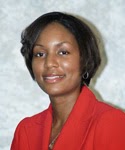
This month's WriteCast episode features a faculty interview from the Atlanta residency in April. Nik speaks with Dr. JaMuir Robinson, faculty member in the School of Health Sciences, about her writing advice for students. Also in this episode, Brittany explains her role as the coordinator of Writing Center residency instruction and design.
Faculty Spotlight: Dr. Kate Swetnam, Riley College of Education and Leadership
 |
| Dr. Kate Swetnam is a Walden graduate. |
Faculty Spotlight: Dr. Anne L. Fetter, Public Policy and Administration
 |
| Walden faculty member Anne Fetter |
Did you know the Writing Center serves faculty as well as students? The subject of our faculty spotlight this month is someone who stood out to us because of her tireless efforts to provide good writing support for her students, reaching out to us regularly to get confirmation of tricky APA rules or to seek helpful resources for particular students. Read on to learn more about California resident Dr. Anne L. Fetter, faculty member in Public Policy and Administration.
What are the most common writing challenges for your
students?
APA formatting
that’s compliant with APA’s sixth edition; form and style; cohesiveness; smooth
flow; and concise, precise writing.
What have you done to help your students master those
skills?
I try my hardest to clarify each Application, including
posting 3-4 sample "A" papers (anonymous, with authors' consent) and
a scoring rubric for each. In addition, I provide samples of APA-compliant
documents, as well as two recently published dissertations for which I served
as URR (again with their permission). I also provide examples of clear research
questions lifted from those dissertations, both on the same general topic, one
qualitative and one quantitative. I work with students in the workshop section
to hone research questions to pass the Litmus Test.
I provide extensive feedback in addition to recommending (at the beginning of
the course and throughout the course) that they take advantage of the resources
offered by the Writing Center.
I view my role as primarily to help students master content, but when the
writing is unreadable, I cannot get to the content. I emphasize that ALL
scholar practitioners (yes, even me) can benefit from others reading and
critiquing their work. I also have a long list of "Common Comments"
that I use to indicate areas for improvement.
How does your own experience as a writer inform your work
with student writers?
Deeply. Practice, practice, practice.
What advice do you have for faculty who want to help
their student writers?
Send them to the Writing Center. Don't ignore nonprofessional
writing or writing that doesn't adhere to APA guidelines, so that the students
don't arrive in my classes saying "no one has ever critiqued my writing
before" and feel angry and betrayed. I feel strongly that the faculty should
present a united front in high standards of academic excellence and very high
standards for clear comprehension of the topic. I even critique the APA
formatting in discussion posts.
What advice do you have for students who want to improve
their writing?
See above, and do
not take criticism of your writing personally; it is all part of the
iterative process of becoming a life-long scholar practitioner. My personal
motto is to try to learn something new every day.
How is a student’s ability to write related to success in
your field?
It is extremely relevant. If a student cannot write a
course Application to par, he or she will never get through the dissertation
process. Upon graduation, a new doctoral level professional will be called upon
to write and review original summative and formative research, write clear and
concise internal and external documents, and be able to present to a wide
variety of diverse audiences without appearing condescending. As we do at
Walden as faculty, new professionals will need to meet individuals at their own
level (whatever that is).
What’s something about you that would surprise your
students?
I took up horseback riding at 42, and after 3 concussions, 8 broken ribs, and a broken ankle, I gave it up at 48 only to break my leg (thanks to a 75-lb. dog) on my 50th birthday. I was a Division I skier in college (Giant Slalom) and used to swim 7-8 hours a day. I am literally just getting back to walking my dogs (a choke chain helps) and have committed to participating in one leg of a mini-triathlon aimed at breast cancer awareness next fall.
Manager of Program Outreach and Faculty Support Amber Cook compiled this interview. If you are a faculty member looking for resources to help support you in your work with student writing, please visit our website's Faculty page.
Faculty Spotlight: Dr. Pettis Perry (Part 2)
When we asked Dr. Pettis Perry to answer our faculty spotlight
questions, he responded with a treasure trove of insights—so much so that we
decided to break his response into two parts. Click here to read Part 1, and enjoy Part 2 below!

Be willing to embrace critical feedback and learning from your instructors. Even strong writers have things to learn in order to write more effectively. Seek feedback when it’s not provided, and focus on the learning rather than the GPA. Cultivate relationships with your instructors by asking questions and seeking understanding regarding the logic of your grades, and seek out those who will give you honest and tough feedback rather than feedback you want to hear.
Work on language skills every opportunity you get. Practice them during every discussion, application, presentation, or memo.
Be patient with yourself as you journey through your degree. Remember that the formal education process is a demanding process that requires a substantial time commitment over a finite period. Informing friends and family members about those commitments can open up scheduled time for writing and completing assignments. Create holes in your schedule, such as working on assignments while using public transportation, during work breaks, or after putting children to sleep.
 How is a student’s
ability to write related to success in your field?
How is a student’s
ability to write related to success in your field?
Other posts in our Spotlight series:
Faculty Spotlight: Dr. Pettis Perry (Part 1)
Faculty Spotlight: Dr. K. Elizabeth McDonald
Student Spotlight: Mary Eldredge-Sandbo
 |
| Dr. Pettis Perry, Ed.D., is a core faculty member and program coordinator of the Master of Science in Leadership Program. |
How does your own
experience as a writer inform your work with student writers?
The most significant shaping experience came from my father,
who only completed 15 months of formal education but taught himself how to read
and write. When I asked my dad how to spell a word, he would tell me to get the
dictionary and we looked up the word together. I learned that not understanding
something was not an excuse for failure, and I also learned to keep a
dictionary handy, which I do to this day.
A second experience that shaped my work with students was
that I failed every writing proficiency test I took. Over time, I discovered
that sitting down to write about a foreign subject did not allow my brain
sufficient time to process the information so that I could use it. Once I began
to understand how I processed information, I adjusted my approach to my school and
professional work.
My favorite teacher from my Jesuit training required us to
write single-page papers regardless of the amount of reading. This forced me to
learn how to write much more effectively and with greater impact. I was also
inspired by the lack of feedback I received from many of my instructors over
the years. My response was to make a personal commitment that if I ever ended
up in a classroom, I would do everything I could to help students.
Recently, I remembered my high school counselor telling me
that I shouldn’t consider going to college because I would not succeed, and the
difficulties I had with writing assessments seemed to reinforce that opinion.
However, by the time I presented my dissertation, a committee member commented
that my dissertation was one of the best he had seen in 20 years of teaching.
What advice do you
have for faculty who want to help their student writers?
Clearly articulate your expectations and provide substantive
content feedback as well as technical writing feedback. Consider the student
perspective: We have so much variation in our faculty expectations that it
creates problems for students who are confused as they move from class to
class. Students complain that many of their faculty provided them 100% scores
with little or no feedback, leading them to believe that there wasn't anything
that needed improvement. It is certainly much easier for us as faculty to
simply give students grades rather than forcing them to earn their grades in an
environment of tough academic scrutiny, and it can be potentially more
lucrative in terms of how high grades may relate to
more positive student evaluations and, therefore,
higher faculty performance evaluations. However, who is being helped
when we do this? If we truly want to support our students, then we have to do the right thing by letting students
know when they are doing well and when they need additional support.
What advice do you
have for students who want to improve their writing?
Be willing to embrace critical feedback and learning from your instructors. Even strong writers have things to learn in order to write more effectively. Seek feedback when it’s not provided, and focus on the learning rather than the GPA. Cultivate relationships with your instructors by asking questions and seeking understanding regarding the logic of your grades, and seek out those who will give you honest and tough feedback rather than feedback you want to hear.
Work on language skills every opportunity you get. Practice them during every discussion, application, presentation, or memo.
Be patient with yourself as you journey through your degree. Remember that the formal education process is a demanding process that requires a substantial time commitment over a finite period. Informing friends and family members about those commitments can open up scheduled time for writing and completing assignments. Create holes in your schedule, such as working on assignments while using public transportation, during work breaks, or after putting children to sleep.
Since writing requires synthesizing and communicating
information, create a system for managing information consumption, reflection
time, and writing time. For example, the MSL program follows a day 3-7 posting
schedule. This creates opportunities for completing all of the required reading
during days 1-2. Do the reading in order of how the materials will be used for
each assignment, which gives your brain an opportunity to process the
information in preparation for using it sequentially.
Take some time to become familiar with your designated
writing manual. Review the table of contents and the example papers, but live in the index. Only
submit your best work and take ownership of the work you submit. Everyone is
busy, so none of us can use that as an excuse for the quality of the work that
we submit. Remember, your ideas belong to you.
Be excited about your education journey and passionate about
your subject, and you will find it easier to sustain momentum. There simply
isn’t any substitute for a positive attitude and passion about your work. In
fact, when we are passionate about the things we do, we generally do not see
the effort as drudgery but rather as an investment in something we truly enjoy.
 How is a student’s
ability to write related to success in your field?
How is a student’s
ability to write related to success in your field?
Whether a leader is seen as credible is closely tied to his
or her ability to use language effectively. Leaders have to be able to
communicate to a wide variety of stakeholders, such as employees, board
members, customers, or vendors. In order to adjust their message effectively,
leaders have to be able to communicate using a variety of mediums that require
the ability to write well.
Functionally, the smaller the organization, the more the
leader has to do to produce reports and correspondence. When leaders are unable
to communicate clearly, concisely, and effectively, they inadvertently produce
dysfunction within their organizations. The ability to communicate effectively
will make the difference between success and failure, not only for the leader,
but for the entire organization.
What’s something
about you that would surprise your students?
I used to collect movies and
recently had to get rid of more than ¾ of my collection (about 350 movies)
because of a lack of space in my new home.
Other posts in our Spotlight series:
Faculty Spotlight: Dr. Pettis Perry (Part 1)
Faculty Spotlight: Dr. K. Elizabeth McDonald
Student Spotlight: Mary Eldredge-Sandbo
Faculty Spotlight: Dr. Pettis Perry (Part 1)
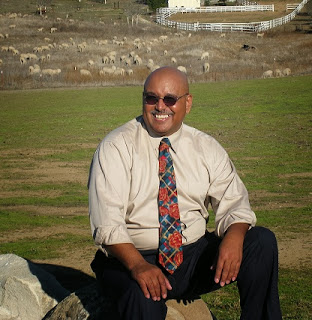
This faculty spotlight features Dr. Pettis Perry, Ed.D., core faculty and program coordinator of the Master of Science in Leadership Program. When we asked Dr. Perry to answer our faculty spotlight questions, he responded with a treasure trove of insights—so much so that we decided to break his response into two parts. Enjoy Part 1!
What are the most common writing challenges for your students?
 The willingness to own
our current writing skills is central to learning how to write well. If writers
assume that they write well and have nothing more to learn, they will meet feedback
with denial, frustration, and defensiveness. As frustrating as it might be to
receive substantive content and writing feedback, finding ways to set the ego
aside is crucial to embracing valuable advice. Openly embracing the feedback
may also lead to closer relationships with faculty members who are willing to
work with students when they need additional support.
The willingness to own
our current writing skills is central to learning how to write well. If writers
assume that they write well and have nothing more to learn, they will meet feedback
with denial, frustration, and defensiveness. As frustrating as it might be to
receive substantive content and writing feedback, finding ways to set the ego
aside is crucial to embracing valuable advice. Openly embracing the feedback
may also lead to closer relationships with faculty members who are willing to
work with students when they need additional support.
Dr. Perry currently resides in Bellingham, Washington. Look for his insights in Part 2 of this faculty spotlight soon!
Other posts in our spotlight series:
Faculty Spotlight: Dr. K. Elizabeth McDonald
Student Spotlight: Mary Eldredge-Sandbo

What are the most common writing challenges for your students?
Becoming familiar
with the rules of the game.
Writing is both a science and
an art; it has to be approached both technically and creatively. The science
encompasses all of the rules of the game
associated with writing according to the writing style being used (APA, in the
case of Walden) and expectations established by the academic program. For
example, the MSL program is an applied theory program, so in addition to
language usage and formatting, the rubrics
contain assessments for how well the theory was applied, content accuracy, how
well the narrative was organized, critical thinking, and creativity. The art of writing encompasses the ability
to convey ideas fully, clearly, concisely, and interestingly. Students sometimes
have difficulty here because it is so dependent upon strength of language
skills and the creative centers in the brain.
Learning the language and subject matter of the discipline.
Learning the language of the discipline (subject matter) that
is being studied is fundamental to communicating effectively and authoritatively.
The way to learn the language of the discipline is much like learning anything
new: A writer must use the words and phrases that structure the language of the
subject. With practice, the degree of familiarity with the language and subject
matter will come through in how we communicate our ideas.
Owning your current
skills with a thirst to grow developmentally.
 The willingness to own
our current writing skills is central to learning how to write well. If writers
assume that they write well and have nothing more to learn, they will meet feedback
with denial, frustration, and defensiveness. As frustrating as it might be to
receive substantive content and writing feedback, finding ways to set the ego
aside is crucial to embracing valuable advice. Openly embracing the feedback
may also lead to closer relationships with faculty members who are willing to
work with students when they need additional support.
The willingness to own
our current writing skills is central to learning how to write well. If writers
assume that they write well and have nothing more to learn, they will meet feedback
with denial, frustration, and defensiveness. As frustrating as it might be to
receive substantive content and writing feedback, finding ways to set the ego
aside is crucial to embracing valuable advice. Openly embracing the feedback
may also lead to closer relationships with faculty members who are willing to
work with students when they need additional support.
Creating the time and
space to write.
Finding the time for organizing thoughts and conceptualizing
the narrative before writing can become an overwhelming exercise, particularly
for working parents with young children. Yet, writing well takes time to
construct, proofread, and draft multiple iterations before producing a final
product of which to be proud. Creating the time and space to write may entail
keeping a list of content notes and ideas, writing individual segments of an
assignment as time permits, and then compiling the work into the final document
in a final sitting. Being flexible and creative about how to complete
assignments creates opportunities for completing the work with less
self-imposed pressure.
Learning to
demonstrate critical thinking.
The
MSL program and many other programs at Walden University emphasize the need to demonstrate
strong critical thinking skills as part of becoming a scholar-practitioner.
Critical thinking is defined here as demonstrating the ability to read,
comprehend, synthesize, and use theory-based literature by applying
it to real-world or case study examples.
Demonstrating critical thinking competency requires several skills, such
as (a) identifying a problem by analyzing an operational work environment, personal
experience, or case study; (b) identifying and discussing the applicable
theory that might help explain what was observed; (c) selecting a
real-life experience or case study example that is reflective of the theory; and (d) applying the theory to the real-world example to demonstrate how the
theory are applicable.
What
have you done to help your students master those skills?
With student feedback, I created a course guide titled My Course Survival Guide, which I post
in doc sharing for students to download. The guide covers a range of topics,
including my expectations, helpful writing tips, and some of the more important
APA rules with examples.
The feedback that I provide is intended to assist students
with communicating their ideas more clearly, concisely, and powerfully to
maximize the impact of their communications. The idea is to help them create
what I refer to as bulletproof arguments
that will withstand counterarguments and also to prepare them for their
capstone documents. My bias is for how
things are communicated rather than towards the direction of the narrative
itself. Therefore, I provide substantive feedback regarding the application of
theory and critical thinking and then references to improving technical writing.
When I come across students with language or
critical-thinking deficiencies, I encourage them to contact and work with the
Writing Center, which is a wonderful resource available to all students. As
part of my feedback to students I also download and attach their Grammarly reports
rather than trying to rewrite their papers for them as I used to do. I found
that my attempts to provide detailed writing feedback were overwhelming
students, so I changed tactics. Today, I combine into a single PDF document the
graded paper, rubric, and Grammarly report so that the student has everything in
one place.
I
also make myself available by telephone. One of the positive outcomes of this practice is that
the conversations not only answer questions and lead to increased learning, but
they often lead to positive relationships with students that continue beyond
graduation. My expectations are posted in several places in my classrooms.
Whenever I get the chance, I strongly encourage students to cultivate a work ethic
that includes doing whatever it takes to devour the subject resources and to
submit only quality work.
Dr. Perry currently resides in Bellingham, Washington. Look for his insights in Part 2 of this faculty spotlight soon!
Other posts in our spotlight series:
Faculty Spotlight: Dr. K. Elizabeth McDonald
Student Spotlight: Mary Eldredge-Sandbo
Faculty Spotlight: Dr. K. Elizabeth McDonald
This
week we present the first in a new blog post series that will spotlight Walden faculty
who have made a difference in the writing development of their students. Look
for a corresponding student spotlight series as well!
 |
| Indiana native Dr. K. Elizabeth McDonald now lives in Minneapolis, MN. |
For
this first faculty spotlight, we identified a Walden instructor who has been
doing extensive work to help her students learn APA style in a logical,
efficient way. Dr.
K. Elizabeth McDonald, core faculty in the MS in Mental Health Counseling
program, has even published on this topic, and the Writing Center is lucky to
have her work featured on our website! We presented
Dr. McDonald with some questions about her
perspective as a Walden instructor.
What
are the most common writing challenges for your students?
I
work with a lot of students in their first course in our master’s program, so
the APA manual itself is a big challenge! Once they make meaning out of the
manual, then the difficulty with logistics seem to disappear. For
example, once students realize that paraphrasing is a clinical counseling skill
as well as a written skill, they cease being over-reliant on quotes in
assignments. Just imagine a counselor parroting back to the client everything
that the client said!
What
have you done to help your students master those skills?
In
addition to providing specific APA page numbers and links to the Writing
Center, I help students make those connections between clinical and written
skills in my feedback to them. For example, I’ll mention that when I am working
with a client who constantly talks in the second person, I have the client
switch the language into first person. If the client says “sometimes you just
don’t know what your husband thinks of you,” I will ask the client to rephrase to
“I don’t know what my husband thinks of me,” which is so much more powerful for
the client. I don’t think it is a coincidence that second person is not recommended
by APA!
How
does your own experience as a writer inform your work with student writers?
I
have received my fair share of red marks on papers (both for school and for
publication) due to formatting issues. Sometimes it feels like my very soul is
in my writing; this can make it difficult to receive feedback about formatting
or content. I try to balance providing feedback with the recognition that
sometimes my feedback may seem trite. When talking about where a period goes in
reference to a citation at the end of the sentence, I let the student know I
realize I am commenting on the placement of a single dot!
What
advice do you have for faculty who want to help their student writers?
Most
importantly, help students find meaning by relating it back to the profession.
Work with others in your program and the Writing Center to develop helpful
resources and make connections between writing skills and professional skills.
Guess
what? You are on stage! Students see unprofessional writing
everywhere they look. As instructors, we have the unique opportunity to be an
example (no pressure here, huh?). I wrote a short article about this very
question, which included an example document written about APA format in APA
style (why the APA does not do this I will never know). The APA
document about APA
is sort of a Cliff’s Notes, and is available in the Writing Center. Boy, I
sound like a lot of fun at a dinner party, huh?
What
advice do you have for students who want to improve their writing?
- Review feedback from your instructor on previous assignments before starting your next assignment. Oh, and be sure to contact your instructor if you do not understand the feedback! [Editor's note: In Blackboard, click on Tools → My Grades → Score to access comments.]
- Begin assignments with a template. I find that downloading a template from the Writing Center and using it for the beginning of each assignment makes for a less time-consuming writing process. Your time is precious; stop spending it looking up how to make the running head for every single assignment!
- Before beginning to write, add headings from the assignment directions. This will help you focus your writing and enable you and your faculty member to quickly see that you have addressed all required elements.
- Throughout your learning process, look for connections between your professional voice and your profession. Learning because you “have to” is elementary (and boring). Take control of your education, look at things with an intrigued eye, and use your critical thinking skills to find connections between your writing style and your profession.
 |
| Counselors need writing skills for case notes and client advocacy. |
How
is a student’s ability to write related to success in your field?
Written
voice is incredibly important in counseling; credibility and advocacy are at
stake! Counselors write case notes at the end of every session, and in the
event that those notes are subpoenaed and provided to the court, they are
subject to intense scrutiny. Counselors need to provide clear and concise
written rationales regarding the interventions used; otherwise, the counselor
(and the profession) loses credibility. Even if the notes never end up in
the courtroom, clinical case notes are sometimes all that exist to provide
evidence of the course of treatment. Counselors also advocate for clients in
written form, such as to a third-party payer, a grant funder, or an
organization to advocate for services. Weak writing skills will significantly
limit the ways counselors can advocate for clients.
What’s
something about you that would surprise your students?
I have entered a single entry into a journal
once a year every year since I was in 5th grade. I also have a
“reasonably adventurous” side. I have zip-lined in Costa Rica, spent a few
weeks in a yurt in Tanzania, walked a questionable and long tension bridge in
Brazil, eaten fried bee larvae in Taiwan, and flown in a hot air balloon at
sunrise over the Maasai Mara National Reserve in Kenya.
Subscribe to:
Posts
(
Atom
)


